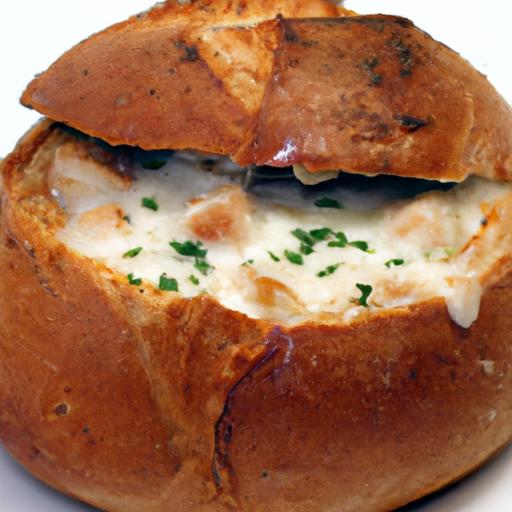

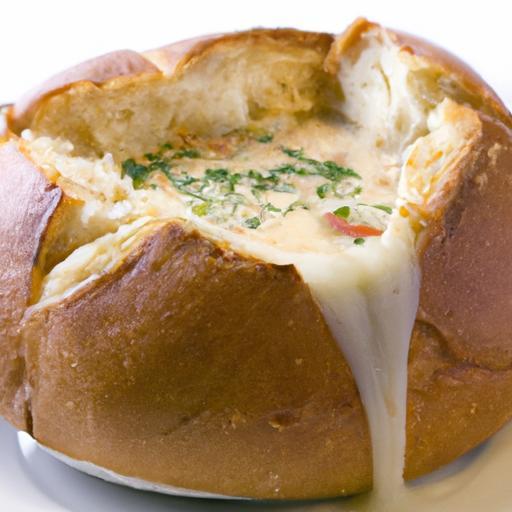
There’s something undeniably satisfying about sinking your spoon into a warm, creamy clam chowder, but when that chowder arrives nestled inside a crusty, freshly baked bread bowl, the experience transcends comfort food and becomes pure culinary magic. This fusion of rich seafood stew and rustic bread awakens the senses with hearty, flavorful bites. Discover the origins, variations, and cozy appeal of clam chowder in a bread bowl—a timeless comfort food wrapped in warmth.
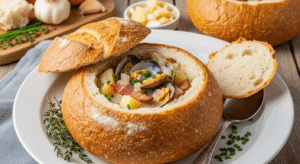
Enjoy creamy New England clam chowder served hot in a crusty bread bowl. Tender clams, potatoes, and smoky bacon create a comforting, hearty meal perfect for chilly days.
Prep and Cook Time
- Readiness: 20 minutes
- Cooking: 40 minutes
- Total: 1 hour
Yield
Serves 4 generous portions
Difficulty level
Medium
Ingredients
- 4 large sourdough round bread bowls (about 6 inches in diameter)
- 4 slices thick-cut bacon, chopped
- 1 medium yellow onion, finely diced
- 2 cloves garlic, minced
- 3 cups peeled and diced Yukon Gold potatoes (about 2 medium potatoes)
- 2 cups fresh clam juice or bottled clam broth
- 2 (6.5 oz) cans chopped clams, drained, reserving juice
- 2 cups heavy cream
- 1 cup whole milk
- 4 tablespoons unsalted butter
- 3 tablespoons all-purpose flour, sifted
- Salt and freshly ground black pepper, to taste
- Fresh thyme sprigs, for garnish
- Fresh chopped chives or parsley, for garnish
- Optional: A splash of dry white wine or sherry (1/4 cup)
Step by step Guide to Crafting Homemade Clam Chowder in a bread Bowl
- Prepare the bread bowls: Using a serrated knife, carefully slice off the top of each sourdough round. Hollow out the interior, leaving about a 1/2-inch thick wall all around. Set aside on a baking sheet.
- Cook the bacon: In a large heavy-bottomed pot over medium heat, cook the chopped bacon until crisp, about 6-8 minutes. Remove with a slotted spoon and set on paper towels. Leave about 2 tablespoons of bacon fat in the pot for flavor.
- Sauté aromatics: Melt the butter in the bacon fat over medium heat. Add diced onion and garlic and sauté until translucent and fragrant, about 5 minutes. Stir occasionally to prevent sticking.
- Make the roux: Sprinkle the flour over the onion mixture; stir constantly for 2 minutes to cook out the raw flour taste and create a thick base for the chowder.
- Add liquids and potatoes: Slowly whisk in the reserved clam juice, clam broth, and, if using, white wine or sherry. Add diced potatoes and bring to a gentle simmer. Cook until potatoes are tender, about 15 minutes, stirring occasionally.
- Incorporate dairy: lower the heat and slowly stir in the cream and milk. Heat through but do not boil, as boiling can cause curdling.
- Add clams and bacon: Fold in the chopped clams and reserved crispy bacon. Warm gently for 3-4 minutes, seasoning generously with salt and freshly ground black pepper.
- Heat bread bowls: Preheat your oven to 350°F (175°C). Place hollowed bread bowls and tops on a baking sheet and warm for 8-10 minutes until slightly toasted but still soft enough to scoop with.
- Serve: Ladle the creamy clam chowder into each bread bowl. Garnish with fresh thyme sprigs and a sprinkle of chopped chives or parsley. Serve promptly with the bread tops on the side for dipping.
Chef’s Notes & Tips for success
- Fresh vs. canned clams: For an elevated broth flavor, use fresh littleneck clams steamed and chopped if available. Otherwise, canned clams work beautifully for convenience.
- Thicker chowder: If you prefer a thicker chowder, increase the roux to 4 tablespoons flour and butter.
- Gluten-free variation: substitute the roux with cornstarch slurry (mix 1 tablespoon cornstarch with 2 tablespoons cold water) added during the simmer phase.
- Make-ahead tip: Prepare the chowder base a day ahead and refrigerate. Reheat gently before serving in freshly warmed bread bowls.
- Bread choice matters: Sourdough is ideal for its sturdy crust and tangy flavor that complements the creamy soup. Avoid very soft breads that may become soggy too quickly.
Pairing Tips and Serving suggestions to Elevate Your Comfort Meal
For a complete indulgent experience, serve this clam chowder in a bread bowl alongside a crisp, bright salad with lemon vinaigrette to cut through the richness. A chilled glass of Sauvignon Blanc or a light pilsner enhances the coastal flavors beautifully. Garnish with a small drizzle of paprika oil or cracked black pepper for visual contrast and subtle smoky notes.
| Nutrient | Per Serving |
|---|---|
| Calories | 520 kcal |
| Protein | 23 g |
| Carbohydrates | 48 g |
| Fat | 26 g |

For more cozy recipes that nourish and delight, check out our collection of seafood soups. To deepen your knowledge of clam chowder’s history and regional twists, visit the National Park Service’s historical overview.
Q&A
Q&A: Savor the Ultimate Comfort – Clam Chowder in a Bread Bowl
Q1: What makes clam chowder in a bread bowl the ultimate comfort food?
A1: Imagine rich, creamy clam chowder brimming with tender clams and hearty potatoes, served inside a warm, crusty bread bowl that soaks up every luscious bite. This blend of textures and flavors offers a sensory hug-creamy meets crunchy, savory meets satisfying. It’s cozy, indulgent, and perfect for chilly days or anytime you crave a appetizing, heartwarming meal.
Q2: Where did the tradition of serving clam chowder in a bread bowl originate?
A2: While clam chowder has long been a staple in New England kitchens, the bread bowl twist hails from San Francisco’s vibrant food scene. The city’s famous sourdough bread proved to be the perfect edible vessel, combining local flavors with practicality. This fusion elevated chowder from a humble soup to a memorable dining experience.
Q3: What kind of bread works best for a chowder bowl?
A3: The ideal bread bowl has a thick, robust crust with a soft, slightly chewy interior. Classic San Francisco sourdough reigns supreme as its tangy flavor complements the creamy chowder and its sturdy crust holds up brilliantly against the soup’s richness. However, hearty Italian or rustic country loaves can work beautifully too.
Q4: Can clam chowder in a bread bowl be made at home?
A4: Absolutely! Start with your favorite clam chowder recipe-creamy New England style or spicy Manhattan style-and pair it with a round loaf of crusty bread. Cut off the top, hollow out the center, and ladle your chowder inside. For a finishing touch, bake the filled bread bowl briefly to meld the flavors and slightly crisp the crust. Homemade comfort at its best!
Q5: Are there any creative twists on this classic dish?
A5: Definitely! Some chefs add crispy bacon bits, a sprinkle of fresh herbs like thyme or parsley, or a dash of smoked paprika for extra depth. Others swap clams for seafood medleys or turn the bread bowl into a dual-souper by layering with melted cheese or a garlic butter crust. The possibilities are as vast as your creativity-and appetite!
Q6: How should one eat clam chowder in a bread bowl without making a mess?
A6: The key is balance. Use a sturdy spoon and enjoy the soup and bread in tandem-scoop some chowder, then bite into the bread edges. When you near the bottom, don’t hesitate to tear off chunks of the bowl to savor every last drop. It’s part of the fun, a tactile, comforting experience that engages all your senses.
Q7: Why does clam chowder in a bread bowl remain a beloved dish worldwide?
A7: At its heart, clam chowder in a bread bowl is more than just a meal; it’s nostalgia, warmth, and hearty satisfaction encapsulated in edible artistry. Wherever you find it, this iconic combo connects people through its timeless blend of flavors and feelings-comfort on a plate, with a crust you can hold in your hands.
In Retrospect
As the warm, velvety clam chowder mingles with the soft, freshly baked bread, each bite becomes more than a meal-it’s an experience that wraps you in cozy indulgence. Whether enjoyed on a chilly afternoon or as a hearty dinner, the classic pairing of chowder in a bread bowl offers a comforting embrace that satisfies both palate and soul. So next time you crave a culinary hug, remember: sometimes, the simplest combinations create the most unforgettable comfort. Dive in, savor every spoonful, and let this timeless dish remind you why comfort food never goes out of style.