
There’s something undeniably comforting about a warm, hearty bowl of clam chowder-a creamy, briny embrace that evokes coastal charm and cozy gatherings. But elevate that experience by pairing it with the perfect edible vessel: a freshly baked bread bowl. This marriage of flavors and textures transforms a simple soup into an indulgent delight, turning every spoonful into a satisfying journey of taste and aroma. In this exploration of savoring clam chowder, we dive into why the bread bowl isn’t just a container, but an essential part of the ultimate chowder experience, where crusty meets creamy in a harmonious festivity of comfort food at its finest.
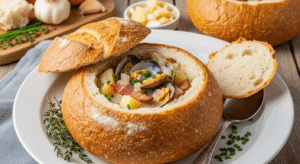
Choosing the Perfect Bread Bowl for Maximum Flavor Absorption
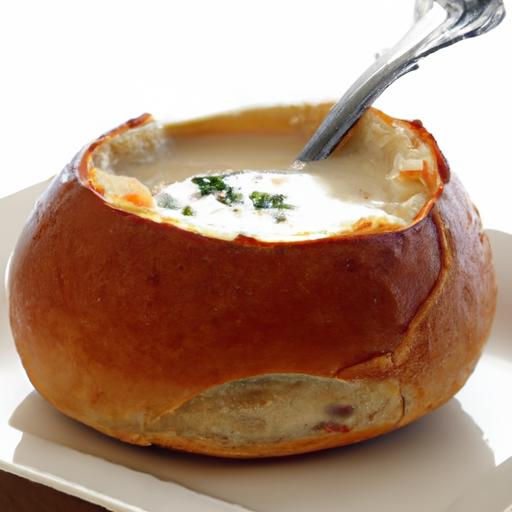
Savoring Clam chowder truly begins with selecting the ideal bread bowl-your vessel for capturing every luscious spoonful of this creamy, briny delight. Opt for a round, sturdy loaf such as a rustic sourdough or a crusty artisan boule. These breads offer a thick crust that holds up well against the chowder’s velvety richness while absorbing the flavorful broth without sogging through too fast. The crumb structure matters too: a dense but tender interior soaks up the clam-infused cream, marrying bread and chowder into one harmonious bite.
when engraving your bread bowl, carve about an inch and a half deep, taking care not to breach the bottom. This careful hollowing not only creates the perfect edible bowl, but also ensures the bread retains its integrity as you ladle in the chowder. for an extra layer of flavor, lightly toast the hollowed loaf or brush the inside with melted butter before filling. This technique provides a delightful buttery barrier that enhances both texture and taste.
Crafting the Creamiest Clam chowder: Ingredients and Techniques
Savoring Clam chowder is about more than just the bread bowl-it’s the chowder itself that steals the spotlight. For a luxuriously creamy base, start with fresh clams-either shucked or whole steamed, to yield a rich clam broth. Incorporate heavy cream and butter for luscious mouthfeel, balanced by the warmth of sautéed onions, celery, and crisp bacon or pancetta for a hint of smokiness. Russet potatoes add a satisfying heartiness, softening into the chowder as it simmers gently.
Achieving the perfect thickness means patience: slowly whisk in a flour-based roux or a cornstarch slurry after softening the veggies, allowing time for the chowder to coat the back of a spoon gracefully. Avoid boiling after cream is added to keep the texture velvety rather than curdled. A splash of fresh lemon juice and a handful of chopped parsley at the end awakens the chowder with subtle brightness, balancing its richness.
Pairing bread Bowls with Clam Chowder Variations for a Memorable Experience
While the classic New England-style clam chowder is a natural partner to sourdough bread bowls, don’t shy away from exploring variations. A Manhattan clam chowder-with its tomato base and zesty spices-pairs wonderfully with rye or pumpernickel bread bowls, the earthiness offsetting the tart tomato beautifully. For a luxurious twist, choose a cheddar herb bread bowl that adds an extra layer of cheesy depth to the creamy chowder inside.
Vegetarian? Consider crafting a chowder variant with mushrooms and corn, served inside a multigrain bread bowl that adds a complex nutty texture and flavor. Whichever combination you choose, remember the key is balancing the bread’s robustness with the chowder’s consistency for a symphony of tastes and textures.
Tips for Serving and Enjoying Your Ultimate Bread Bowl Delight
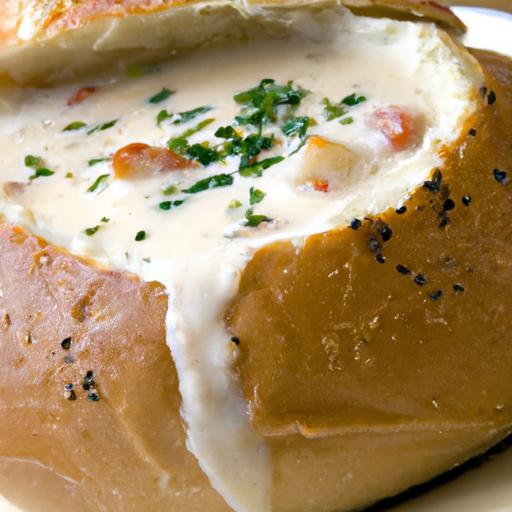
Serve your clam chowder bread bowl piping hot, placing it on a rustic wooden board or a deep plate to catch any drips. Garnish with finely chopped fresh herbs-parsley, chives, or thyme-to brighten the bowl visually and aromatically. A sprinkle of crispy bacon or a few crunchy oyster crackers on the side adds satisfying contrast.
Encourage guests to scoop from the center first, savoring the mingling of bread and chowder as the walls gradually soften. Leftover bread from the hollowing process is perfect toasting as a side crouton or dunking tool. Pair this indulgent dish with a crisp glass of Sauvignon Blanc or a light pilsner to cut through the chowder’s richness and elevate the entire experience.
Prep and Cook Time
- Preparation: 20 minutes
- Cooking: 45 minutes
- Total Time: 1 hour 5 minutes
Yield
Serves 4 hearty portions in bread bowls
Difficulty Level
Medium – Ideal for cooks comfortable with layering flavors and bread carving techniques
Ingredients
- 4 round sourdough bread loaves (about 6 inches in diameter)
- 2 lbs fresh clams, scrubbed and steamed
- 4 strips bacon, finely chopped
- 1 medium onion, diced
- 2 celery stalks, diced
- 3 medium russet potatoes, peeled and diced
- 4 cups clam juice (from steaming clams with added bottled clam juice, if needed)
- 2 cups heavy cream
- 4 tbsp unsalted butter
- 3 tbsp all-purpose flour
- 1 tbsp fresh lemon juice
- Salt and freshly ground black pepper, to taste
- Chopped fresh parsley, for garnish
Instructions
- Prepare the bread bowls: Using a serrated knife, slice the top off each sourdough loaf. Hollow out the insides, leaving about 1½ inches of bread around the edges. Reserve the removed bread chunks for toasting later.
- Cook the clam chowder base: In a large pot, cook the chopped bacon over medium heat until crispy, about 5-7 minutes. Remove and drain excess fat, keeping the flavorful drippings in the pot.
- sauté the aromatics: Add butter to the bacon drippings and melt over medium heat. Add diced onions and celery, sautéing until translucent and fragrant, about 6 minutes. Stir occasionally to avoid browning.
- Create the roux: Sprinkle the flour over the softened vegetables. Stir continuously for 2 minutes to cook the raw flour taste away and form a thick base.
- Add liquid and potatoes: Gradually whisk in the clam juice, ensuring no lumps remain. Add diced potatoes, bring to a gentle simmer, and cook until potatoes are tender, about 15 minutes.
- Incorporate clams and cream: Chop the steamed clams roughly and add both clams and heavy cream to the pot. Heat gently, avoiding boiling, until warmed through and creamy.
- Finish seasoned: Stir in lemon juice, cooked bacon, then season with salt and pepper to taste. Remove from heat.
- Toast the bread chunks: Toss reserved bread chunks with a little olive oil, salt, and pepper. Toast in a 375°F oven for 10 minutes until golden brown and crisp.
- Assemble and serve: Ladle hot clam chowder into each hollowed bread bowl. Garnish with parsley and serve promptly alongside toasted bread chunks or oyster crackers.
Chef’s Notes
- For deeper clam flavor, simmer clam shells in water before adding to chowder broth.
- Gluten-free option: Use gluten-free bread bowls and substitute flour with cornstarch or a gluten-free roux mix.
- Make ahead: Prepare chowder a day before and reheat gently, then fill fresh bread bowls just prior to serving.
- Variations: Swap bacon for smoked sausage for a heartier twist or add corn kernels for sweetness.
Serving Suggestions
Present the clam chowder bread bowls on large rustic plates with a drizzle of melted butter and a sprinkle of fresh chives or thyme. Pair with a crisp white wine such as a chilled Sauvignon Blanc or a citrusy IPA. For a fun side, serve alongside a vibrant kale salad tossed with lemon vinaigrette or simple classic coleslaw.
| Nutrient | Per Serving |
|---|---|
| Calories | 620 kcal |
| Protein | 28 g |
| Carbohydrates | 55 g |
| Fat | 30 g |

For a deeper dive into bread bowl techniques, check out our artisan bread bowls guide. To explore more about clam nutrition and sustainable sourcing, visit the FDA’s official seafood safety page.
Q&A
Q&A: Savoring Clam Chowder – The Ultimate Bread Bowl Delight
Q1: What makes clam chowder such a beloved comfort food?
A1: Clam chowder’s magic lies in its rich, creamy texture combined with the briny sweetness of tender clams and a medley of potatoes, onions, and herbs. It’s a hearty embrace on a chilly day, invoking memories of coastal shores and cozy kitchens.
Q2: Why serve clam chowder in a bread bowl?
A2: Serving clam chowder in a bread bowl turns a simple meal into a sensory experience. The crusty, toasted bread acts like an edible bowl, soaking up every luscious bite of chowder. It adds delightful texture, aroma, and an element of rustic charm that elevates the dish from soup to feast.
Q3: What type of bread works best for a chowder bowl?
A3: A sturdy round loaf, such as sourdough or a rustic country bread, is ideal. Its thick crust keeps the chowder contained without sogging through, while the chewy interior complements the creamy soup. Plus, the bread you dip and nibble when you’re done is half the fun!
Q4: Can I customize my clam chowder bread bowl?
A4: Absolutely! Add crispy bacon bits, chopped fresh herbs like chives or parsley, or even a sprinkle of sharp cheddar on top. For some spice, a dash of cayenne or smoked paprika can bring warmth. The beauty lies in making it your own ultimate bowl of comfort.
Q5: How do I ensure the bread bowl doesn’t get soggy too quickly?
A5: To prevent sogginess, hollow out the bread carefully, leaving a thick enough wall. Toasting the inside slightly before ladling in the chowder creates a barrier that helps maintain crispness. enjoy it promptly-part of the charm is savoring the evolving texture from crispy to soaked!
Q6: Can clam chowder bread bowls be made ahead of time?
A6: It’s best to prepare the bread bowls fresh, especially right before serving. The chowder itself can be made in advance and reheated gently. Once ready to serve, assemble your bread bowls and fill them hot for the ultimate dining experience.
Q7: Where did the tradition of serving soup in a bread bowl originate?
A7: The bread bowl tradition is a time-honored practice found in many cultures-from Eastern European borscht in hollowed rye loaves to clam chowder in New England’s coastal towns. It’s a clever and delicious way to eat hearty soup with minimal cleanup.
Q8: Any tips for the perfect clam chowder recipe to fill the bread bowl?
A8: Use fresh clams or high-quality canned clams for authentic flavor. Simmer gently to meld ingredients, avoid boiling to keep the creamy base smooth, and season thoughtfully with thyme, bay leaves, and a touch of white pepper. Don’t forget a splash of heavy cream or milk to achieve that luscious texture.
Q9: What beverage pairs best with clam chowder in a bread bowl?
A9: crisp, refreshing drinks like a chilled Chardonnay, a light pilsner, or even a sparkling water with lemon complement the richness beautifully. For non-alcoholic options, a cold iced tea or a citrusy lemonade refreshes the palate.
Q10: why is clam chowder in a bread bowl the “ultimate” bread bowl delight?
A10: As it combines the best of both worlds-the luxurious creaminess and briny depth of clam chowder with the hearty, satisfying bite of fresh bread. Together, they create a dish that’s comforting yet indulgent, humble yet remarkable-the ultimate cozy culinary hug in a bowl!
Closing Remarks
Whether you’re a chowder connoisseur or a curious first-timer, savoring clam chowder in a freshly baked bread bowl transforms a simple meal into a comforting experience that delights all the senses. The warm, creamy broth, studded with tender clams and savory herbs, finds its perfect partner in the crusty, hollowed-out bread-each bite a harmonious blend of flavor and texture. So next time you crave a hearty dish that feels like a warm embrace, reach for the ultimate bread bowl delight and let every spoonful carry you to coastal kitchens and cozy gatherings alike. After all, clam chowder served this way isn’t just food-it’s a celebration of tradition, taste, and the joy of simple, satisfying comfort.